Find pneumatic beverage cup sealing and filling machine for Juice, Yogurt, and Water
Source 30 pneumatic beverage cup sealing and filling machine models suitable for juice, yogurt, and water production. Buyers can compare specifications including automatic grade, voltage, and filling principles from verified Chinese manufacturers.
Key considerations
Products List


Comprehensive Sourcing Guide
Strategic Sourcing Guide for Pneumatic Beverage Cup Sealing and Filling Machines
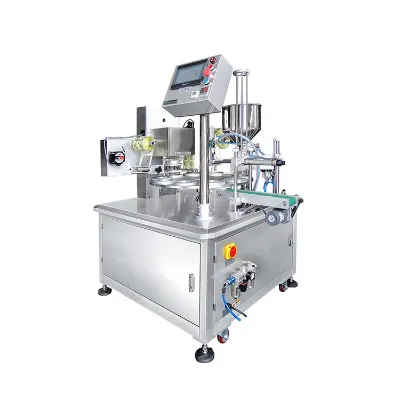
The global demand for ready-to-drink beverages, dairy products, and single-serve snacks has driven a significant shift toward automated packaging solutions. Among the most critical pieces of equipment in this sector is the pneumatic beverage cup sealing and filling machine. These systems are designed to handle the precise filling of liquid and semi-liquid products into cups, followed immediately by the application of a film seal. Sourcing such machinery requires a disciplined approach that balances technical capability with operational reliability. This guide provides a comprehensive framework for buyers evaluating pneumatic cup filling and sealing solutions, grounded in observed market data and technical specifications.
Technical Architecture and Operational Mechanics
The core functionality of a pneumatic beverage cup sealing and filling machine relies on the integration of pneumatic actuation with precise volumetric dosing. Unlike mechanical systems that may rely on gears and cams for every movement, pneumatic systems utilize compressed air to drive cylinders, offering smoother operation and easier adjustment of stroke lengths. The observed market data indicates that the driven type for these machines is frequently pneumatic, which allows for high-speed operation while maintaining gentle handling of delicate products like yogurt or fruit pulp.
A critical component of the filling mechanism is the dosing device. In the context of these machines, the plunger is a common configuration used for volumetric filling. This method ensures that the volume of liquid dispensed remains consistent regardless of the viscosity of the product, whether it is water, oil, juice, or a thicker substance like ketchup or jam. The filling principle often cited is pressure-based, which helps in managing the flow rate and preventing air entrapment, a common issue when filling viscous liquids.
The structural design of the machine also plays a vital role in its efficiency. Linear structures are prevalent in this category, allowing for a straightforward workflow where cups are fed, filled, and sealed in a straight line. This contrasts with rotary designs, which may be better suited for extremely high volumes but can be more complex to maintain. The feeding cylinder structure is often multi-room, enabling the machine to handle different cup sizes or types within the same production run without extensive retooling. Furthermore, the packaging container lifting structure is typically pneumatic, ensuring that the cups are held securely during the sealing process to prevent misalignment.
Product Versatility and Application Scope
One of the primary advantages of modern pneumatic cup filling and sealing machines is their versatility across various product categories. The observed application data reveals that these machines are not limited to a single type of beverage. They are explicitly designed to handle food and beverage applications, including milk, water, oil, juice, and powder. The specific product models available in the market, such as the FFS-6000 and BG60, demonstrate a wide range of capabilities.
The functional scope extends beyond simple liquids. The machines are capable of processing items with varying consistencies, including jelly, fruit pulp, yogurt, jam, and ketchup. Some models feature a double-jacketed machine tank with mixing capabilities, which is essential for products that require temperature control or homogenization before filling. This feature is particularly valuable for dairy products and beverages that might separate if left to sit.
The packaging material compatibility is another key factor. While plastic is the most common material for the cups, the sealing film is often a distinct material, such as aluminum or composite film. The machine must be able to handle the specific mechanical properties of these films to ensure a hermetic seal. The observed data lists packaging materials as plastic, metal, and other types, indicating that the machinery can be configured for different packaging requirements. The ability to customize the machine for specific applications, such as tea, vegetable drinks, or even non-food items like hair care and cosmetics, makes these units highly adaptable for diverse manufacturing needs.
Performance Specifications and Capacity Metrics
When evaluating the technical specifications of a pneumatic cup sealing and filling machine, buyers must look beyond the basic description to understand the actual production capacity. The machinery capacity is a critical metric that determines the throughput of the production line. Observed data points to capacities such as 2000 BPH (Bottles Per Hour) and 1000 BPH, which serve as benchmarks for medium-to-high volume operations. However, it is important to note that these figures are specific to certain models and may vary based on the cup size and product viscosity.
The physical dimensions of the machine are also significant for facility planning. Standard specifications for these units often include dimensions around 2650mm in length, 1900mm in width, and 2400mm in height. These dimensions are crucial for determining the floor space required and the layout of the surrounding production line. The voltage requirements are typically 220V/380V at 50Hz, which aligns with standard industrial power supplies in many regions, though buyers must verify local grid compatibility.
The automatic grade of these machines is consistently listed as fully automatic. This means that the entire process, from cup feeding to sealing and discharge, is managed by the machine's control system with minimal human intervention. The presence of a multi-head filling valve further enhances efficiency by allowing multiple cups to be filled simultaneously. This configuration is essential for achieving the high BPH rates observed in the market. Buyers should verify the specific speed capabilities of the model they are considering, as the theoretical maximum speed may differ from the practical speed when accounting for product characteristics and cup handling.
Compliance, Standards, and Quality Assurance
Ensuring that a pneumatic cup filling and sealing machine meets industry standards is paramount for long-term operational success. The origin of the machinery, often Jiangsu or Wenzhou in China, suggests a robust manufacturing base, but buyers must verify the specific standards applied to each unit. The product standard for some models is listed as a specific dimension, while others reference national standards like "China" or "C". This variability highlights the need for buyers to request detailed compliance documentation rather than relying on general descriptions.
Quality assurance is a critical component of the procurement process. Many suppliers provide video outgoing inspection services, allowing buyers to verify the machine's condition and functionality before shipment. This visual confirmation is an excellent way to ensure that the machine is assembled correctly and that all pneumatic and electrical components are functioning as expected. Additionally, the warranty period is a standard indicator of manufacturer confidence. A one-year warranty is commonly observed, providing a baseline for support and repair coverage.
Buyers should also investigate the certification status of the machine, particularly regarding safety and electrical compliance. While specific certification names are not universally listed in the provided data, the presence of a pneumatic system implies adherence to pressure vessel and safety standards. The machine's ability to handle different materials, including food-grade plastics and metals, must be verified to ensure it meets food safety regulations in the target market.
Cost Drivers and Procurement Considerations
The cost of a pneumatic beverage cup sealing and filling machine is influenced by several factors, including the level of automation, the capacity of the machine, and the complexity of the filling mechanism. The observed price range in the market is vast, spanning from $1 to $120,000. This wide range reflects the diversity of available options, from small-scale manual-assist units to fully automated, high-speed production lines. The minimum order quantity (MOQ) is typically 1, allowing for flexibility in purchasing for small businesses or pilot projects.
Customization is a significant cost driver. Many suppliers offer available customization options, which can include modifications to the filling head, the sealing mechanism, or the control system. While customization adds value, it also increases the lead time and the final price. Buyers must carefully evaluate whether the added features justify the additional cost. The packaging type, often a wooden case or wooden box, is another factor that affects shipping costs and protection during transit.
Lead times and production capacity are also critical considerations. The machinery capacity, such as 2000 BPH, directly impacts the return on investment. A higher capacity machine may have a higher upfront cost but can significantly reduce the cost per unit in the long run. Buyers should calculate the break-even point based on their production volume and the specific price of the machine.
Supplier Evaluation and Long-Term Maintenance
Selecting the right supplier is as important as selecting the right machine. Buyers should prioritize suppliers who offer comprehensive after-sales support, including technical assistance and spare parts availability. The origin of the machine, whether from Jiangsu, Wenzhou, or Zhe Jiang, can provide insights into the manufacturing ecosystem and the availability of local support networks.
Maintenance is a key aspect of long-term procurement. Pneumatic systems require regular maintenance of air filters, lubricators, and cylinders to ensure optimal performance. The linear structure and multi-room feeding systems are designed for ease of maintenance, but buyers should verify the availability of replacement parts. The warranty period of one year is a standard starting point, but buyers should negotiate extended warranty options or service contracts to protect their investment.
In conclusion, sourcing a pneumatic beverage cup sealing and filling machine requires a thorough understanding of the technical specifications, application requirements, and cost drivers. By focusing on the observed data and adhering to a disciplined evaluation process, buyers can identify machines that meet their production needs while ensuring compliance with industry standards. The versatility of these machines, combined with their high level of automation, makes them a valuable asset for any beverage or food packaging operation.
FAQs
What is the typical capacity of these machines?
The typical capacity ranges from 1000 to 2000 bottles per hour depending on the specific model. This throughput is suitable for medium-to-high volume operations handling liquids like milk, juice, or water.
Can the machine handle different product viscosities?
Yes, the machine can process various viscosities including water, oil, juice, yogurt, jam, and ketchup. It uses a plunger dosing device to ensure consistent volumetric filling regardless of product thickness.
What is the warranty period for the equipment?
The standard warranty period provided is one year. This coverage ensures support for the pneumatic and electrical components during the initial operational phase of the machine.
How is the machine driven and structured?
The machine is driven by a pneumatic system with a linear structure. This design allows for smooth operation and easy adjustment of stroke lengths while maintaining a straightforward workflow for filling and sealing.
Is customization available for specific production needs?
Customization is available to adapt the machine for specific applications like tea, cosmetics, or dairy products. Buyers can request modifications to the filling head or sealing mechanism to match their unique requirements.
What packaging materials are compatible with this machine?
The machine is compatible with plastic, metal, and other packaging materials. It specifically handles plastic cups sealed with film, ensuring a hermetic seal for various food and beverage applications.